




What is the spectral width of a dual - receiver bosa?
 Dec 23, 2025|
 As a supplier of dual - receiver BOSAs, I often encounter questions from customers regarding various technical parameters of our products. One of the most frequently asked questions is about the spectral width of a dual - receiver BOSA. In this blog post, I will delve into the concept of spectral width, its significance in dual - receiver BOSAs, and how it relates to the performance of our products.
Understanding Spectral Width
Spectral width is a fundamental concept in the field of optics, especially when dealing with light sources and optical receivers. In simple terms, the spectral width of an optical signal refers to the range of wavelengths over which the signal's power is distributed. It is typically measured in nanometers (nm) and provides an indication of the purity or the spread of the optical spectrum.
To understand this better, imagine a light source that emits light at a single, precise wavelength. In an ideal world, the spectral width of such a source would be zero. However, in reality, all light sources have a non - zero spectral width due to various factors such as the physical mechanism of light emission, temperature fluctuations, and the presence of impurities.
For a dual - receiver BOSA, which combines two receivers in a single package, the spectral width is a crucial parameter. The two receivers are designed to detect different wavelengths of light, and the spectral width of the incoming optical signals can significantly impact their performance.
Significance of Spectral Width in Dual - Receiver BOSAs
Signal Detection and Sensitivity
The spectral width affects the ability of the dual - receiver BOSA to detect optical signals accurately. Each receiver in the BOSA is optimized to detect a specific wavelength or a narrow range of wavelengths. If the spectral width of the incoming signal is too wide, it may extend beyond the range of wavelengths that the receiver is designed to detect. This can lead to a reduced sensitivity of the receiver, as it may only be able to capture a portion of the total signal power.
For example, if a receiver in the dual - receiver BOSA is designed to detect light at a wavelength of 1550 nm with a spectral response range of ± 10 nm, and the incoming signal has a spectral width of 30 nm centered around 1550 nm, only a fraction of the signal power will fall within the receiver's detection range. This can result in a weaker electrical signal output from the receiver, making it more difficult to accurately demodulate the data carried by the optical signal.
Crosstalk between Receivers
In a dual - receiver BOSA, crosstalk between the two receivers is a major concern. Crosstalk occurs when the signal intended for one receiver leaks into the other receiver, causing interference and potentially degrading the performance of both receivers. The spectral width of the optical signals can play a significant role in crosstalk.
If the spectral widths of the signals received by the two receivers overlap, there is a higher probability of crosstalk. For instance, if one receiver is designed to detect wavelengths in the 1310 nm range and the other is for 1550 nm, but the spectral widths of the incoming signals are so wide that they overlap, the signal from one wavelength range may be detected by the other receiver, leading to false detections and errors in data reception.
Wavelength Division Multiplexing (WDM) Compatibility
Dual - receiver BOSAs are often used in wavelength division multiplexing (WDM) systems, where multiple optical signals at different wavelengths are transmitted over a single optical fiber. In WDM applications, the spectral width of the signals is crucial for efficient use of the available bandwidth.
A narrower spectral width allows for more closely spaced wavelengths to be used in the WDM system, increasing the overall data - carrying capacity of the fiber. If the spectral width of the signals is too wide, the wavelengths need to be more widely spaced to avoid interference between the channels, reducing the number of channels that can be multiplexed onto the fiber.
Factors Affecting the Spectral Width of Dual - Receiver BOSAs
Light Source Characteristics
The spectral width of the optical signals received by the dual - receiver BOSA is largely determined by the characteristics of the light source. Different types of light sources, such as lasers and light - emitting diodes (LEDs), have different spectral widths.
Lasers typically have a much narrower spectral width compared to LEDs. For example, a distributed feedback (DFB) laser can have a spectral width on the order of a few picometers (pm), while a superluminescent light - emitting diode (SLED) may have a spectral width of several tens of nanometers. When choosing a light source for a system that uses a dual - receiver BOSA, it is important to consider the spectral width requirements of the BOSA to ensure optimal performance.

Temperature and Environmental Conditions
Temperature can have a significant impact on the spectral width of optical signals. As the temperature changes, the energy levels of the atoms or molecules in the light - emitting material can change, causing a shift in the emitted wavelengths and an increase in the spectral width.
In addition to temperature, other environmental factors such as humidity and mechanical stress can also affect the spectral width. For example, mechanical vibrations can cause small changes in the physical structure of the light - emitting device, leading to fluctuations in the emitted wavelengths.
Our Dual - Receiver BOSA Products and Spectral Width
At our company, we are committed to providing high - quality dual - receiver BOSAs with well - controlled spectral widths. Our products are designed to work with a variety of light sources and are optimized for different applications, including WDM systems and high - speed data communication.
We use advanced manufacturing techniques and materials to ensure that the spectral response of our receivers is as narrow and stable as possible. This allows for better signal detection, reduced crosstalk, and improved compatibility with WDM systems.
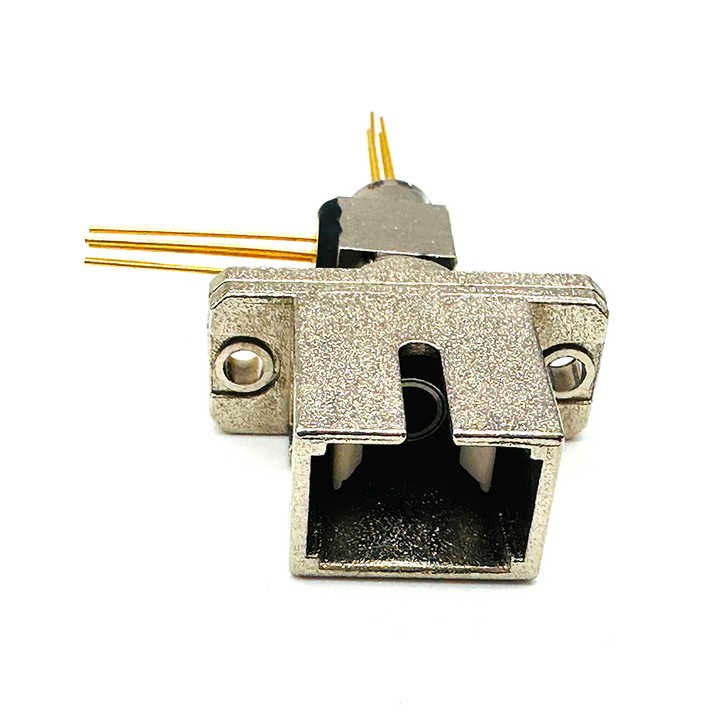
One of our popular products is the Receptacle Dual - Receiver BOSA. This BOSA is designed for easy integration into optical modules and offers excellent performance in terms of spectral width and sensitivity. It is suitable for a wide range of applications, from short - reach data centers to long - haul optical communication networks.
Contact Us for Procurement
If you are in need of high - quality dual - receiver BOSAs for your optical communication systems, we would be delighted to discuss your requirements. Our team of experts can provide you with detailed technical information, product samples, and competitive pricing. Whether you are a small - scale integrator or a large - scale network operator, we have the products and the expertise to meet your needs.
References
- Agrawal, G. P. (2012). Fiber - Optic Communication Systems. Wiley.
- Keiser, G. (2013). Optical Fiber Communications. McGraw - Hill Education.